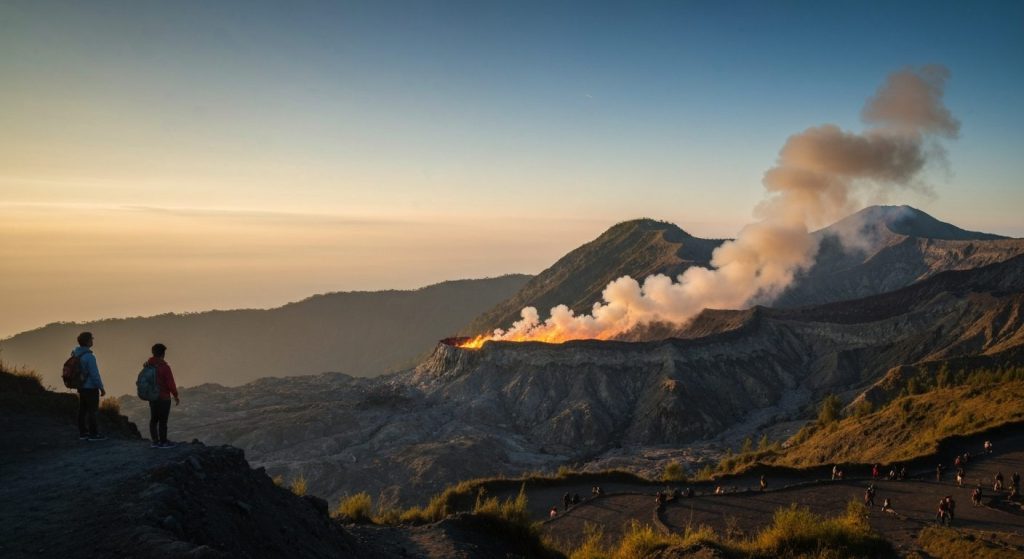
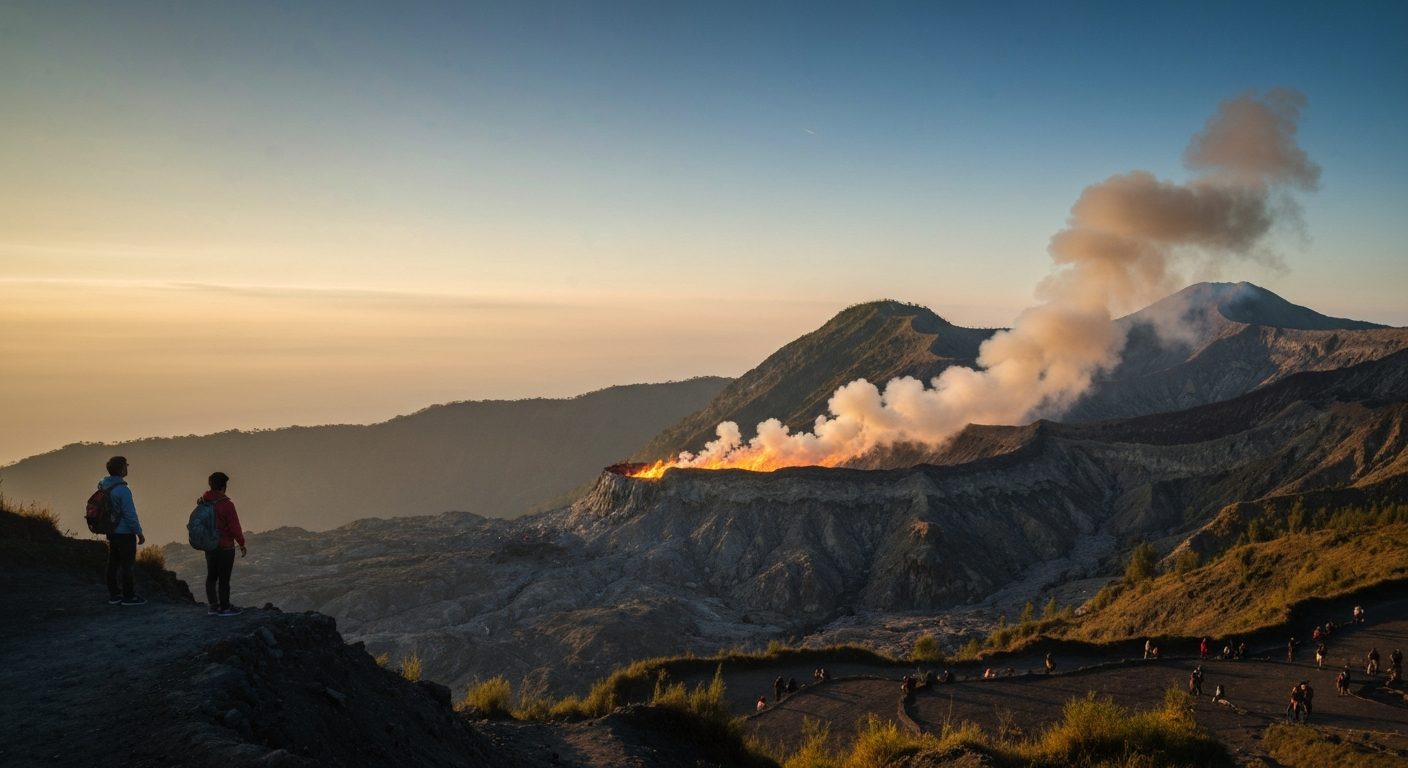
An Ijen Blue Fire Tour from Bali offers a unique overnight adventure to witness the electric blue flames of Kawah Ijen volcano. This guide covers everything you need to know about the Ijen Blue Fire tour Bali, from logistics and timing to safety and booking. We’ll help you understand what’s involved in planning your visit to see the Kawah Ijen blue fire, including how to get there, what to expect on the hike, and transparent cost breakdowns for private tours operated by our team at Bali Premium Trip.
What is the Kawah Ijen Blue Fire? And When to See It?
The Kawah Ijen blue fire phenomenon is a natural spectacle found only in a few places globally, with East Java’s Ijen crater being one of the most accessible. It isn’t molten lava but rather the combustion of sulfuric gases that emerge from cracks in the volcano at high pressures and temperatures. When these hot gases meet the oxygen-rich air, they ignite, burning with an electric blue flame. This gas then condenses into liquid sulfur, which continues to burn as it flows down the slopes, creating the illusion of blue lava.
So, what time can you see the blue fire Kawah Ijen? The blue flames are only visible in complete darkness. This means you need to be at the bottom of the crater, near the sulfur mining area, between roughly 2:00 AM and 5:00 AM. After 5:00 AM, as dawn approaches, the rising sun quickly washes out the blue light, making the flames impossible to distinguish from the surrounding sulfur vents. To catch this specific window, the Ijen night hike Bali tour typically starts very late at night from your accommodation in Bali.
The Ijen Blue Fire Tour from Bali: Logistics Overview
Organizing an Ijen blue fire crater tour Bali requires precise timing and coordination, especially when starting from Bali. It’s a multi-stage journey involving road travel, a ferry crossing, and a strenuous hike.
Stage 1: The Late-Night Transfer from Bali
Your journey begins with a late-night pickup from your accommodation in popular South Bali areas like Canggu, Seminyak, Kuta, Legian, Sanur, or Ubud. Depending on your pickup location, this usually occurs between 6:00 PM and 9:00 PM. You’ll travel by private air-conditioned vehicle towards Gilimanuk, the westernmost port of Bali. This drive can take 3 to 4 hours, depending on traffic and your starting point.
Stage 2: The Bali Strait Ferry Crossing (Gilimanuk to Ketapang)
Upon arrival at Gilimanuk Port, your driver will assist you with tickets and boarding the public car ferry. The crossing itself from Gilimanuk, Bali, to Ketapang, Banyuwangi (East Java), typically takes 45 to 60 minutes. These ferries operate 24 hours a day, so you won’t experience long waits. While basic, they offer a chance to stretch your legs and perhaps grab a snack.
Stage 3: Drive to Ijen Base Camp (Paltuding)
Once you arrive at Ketapang Port in Banyuwangi, East Java, you’ll be met by your local Ijen crater tour guide and a dedicated driver. They will then take you on a roughly 1 to 1.5-hour drive through rural landscapes and winding roads to Paltuding, the official starting point for the Kawah Ijen hike. Here, you’ll find basic facilities like toilets and a small warung (local eatery) for hot drinks.
Stage 4: The Kawah Ijen Blue Fire Hiking Ascent
From Paltuding (approximately 1,800 meters above sea level), the hike to the crater rim begins. This initial ascent is about 3 kilometers long and takes most people 1.5 to 2 hours to complete. The trail is well-trodden but involves a consistent uphill climb, with some steeper sections, especially near the beginning.
Once at the crater rim (around 2,300 meters), your guide will lead you down into the crater itself. This descent is more challenging, often on loose volcanic rock and uneven terrain. It takes an additional 30 to 45 minutes to reach the blue fire viewing points near the active sulfur vents. This is where you’ll spend time witnessing the blue flames.
Stage 5: Sunrise at the Crater and Descent
After soaking in the blue fire spectacle, you’ll ascend back to the crater rim to catch the sunrise. The views from the rim, overlooking the turquoise acidic lake and the surrounding peaks, are a stark contrast to the darkness of the blue fire experience. The lake itself is the largest highly acidic crater lake in the world. You’ll then begin the descent back to Paltuding, which takes approximately 1 to 1.5 hours.
Stage 6: Return Journey to Bali
From Paltuding, you’ll drive back to Ketapang Port (1-1.5 hours), take the ferry back to Gilimanuk (45-60 minutes), and then return to your accommodation in Bali (3-4 hours). You can expect to arrive back in South Bali between 12:00 PM and 3:00 PM the following day, depending on traffic and your drop-off point. This entire journey, from Bali departure to Bali return, is a demanding 18-24 hour circuit.
Your Ijen Blue Fire Tour Options: 1-Day vs. 2-Day vs. Combined Bromo-Ijen
Travellers coming from Bali typically choose between a fast-paced 1-day Ijen trip or a more relaxed 2-day option that includes an overnight stay in Banyuwangi. For those with more time, combining Ijen with Mount Bromo is a popular choice for a longer East Java adventure.
1-Day Ijen Blue Fire Tour from Bali (Overnight Circuit)
This is the most common and direct option for seeing the Ijen blue fire tour from Bali.
- Departure: Late evening (6:00 PM – 9:00 PM) from your Bali accommodation.
- Journey: Overnight travel (car + ferry) to Banyuwangi, then Paltuding.
- Hike: Hike up Ijen in the early morning hours (around 2:00 AM – 5:00 AM for blue fire).
- Return: Immediately after the hike, travel back to Bali.
- Arrival: Mid-afternoon the next day (12:00 PM – 3:00 PM).
- Pros: Efficient use of time, no extra accommodation costs.
- Cons: Very demanding due to minimal sleep and extensive travel. Can feel rushed.
2-Day Ijen Blue Fire Tour from Bali (Overnight in Banyuwangi)
This option breaks up the journey, allowing for rest before and after the hike.
- Day 1:
- Morning/afternoon pickup from Bali (around 10:00 AM – 2:00 PM).
- Travel to Ketapang, Banyuwangi (car + ferry).
- Check into a hotel in Banyuwangi for rest.
- Dinner and early sleep.
- Day 2:
- Late-night wake-up (around 12:00 AM – 1:00 AM).
- Drive to Paltuding.
- Hike Ijen for blue fire and sunrise.
- Return to hotel for breakfast and check-out.
- Travel back to Bali.
- Arrival in Bali: Late afternoon/early evening (4:00 PM – 7:00 PM).
- Pros: Allows for proper rest, reduces fatigue, more comfortable pace.
- Cons: Requires an extra night of accommodation, longer overall trip duration.
Combined Bromo & Ijen Tour from Bali (3-Day/2-Night or 4-Day/3-Night)
For those seeking to explore more of East Java’s volcanic landscapes, combining Ijen with Mount Bromo is a popular choice. This typically requires at least 3 days.
- Routing: Bali -> Ijen (overnight in Banyuwangi) -> Bromo (overnight near Bromo) -> Surabaya/Malang Airport or back to Bali.
- Highlights: Ijen blue fire, Ijen crater lake, Bromo sunrise from viewpoint, Bromo crater trek.
- Pros: Experience two iconic volcanoes, comprehensive East Java adventure.
- Cons: Longer commitment, more complex logistics, higher cost.
- Ijen Tour Option Comparison
-
- 1-Day (Overnight Circuit):
- Total Duration: ~18-24 hours.
- Sleep: Minimal, mostly in vehicle/ferry.
- Pace: Fast-paced, demanding.
- Accommodation: None needed in Java.
- Ideal for: Time-constrained travelers, those who don’t mind minimal sleep.
- 2-Day (Overnight in Banyuwangi):
- Total Duration: ~30-36 hours.
- Sleep: Proper sleep in a hotel.
- Pace: More relaxed, comfortable.
- Accommodation: 1 night in Banyuwangi hotel.
- Ideal for: Those preferring comfort, less fatigue, or travelling with family.
- 3-4 Day (Bromo & Ijen Combo):
- Total Duration: 3-4 days.
- Sleep: 2-3 nights in Java hotels.
- Pace: Varied, comprehensive.
- Accommodation: 1 night Banyuwangi, 1-2 nights near Bromo.
- Ideal for: Adventurous travelers with more time, seeking full East Java experience.
What to Expect on the Ijen Night Hike: Safety and Preparation
The Ijen crater blue fire hiking is a rewarding experience, but it’s important to be prepared for the physical demands and unique environment.
Fitness Level Required
The hike to the crater rim is moderately challenging. It involves a consistent uphill climb over 3 kilometers, with an elevation gain of around 500 meters. The path is generally clear, but it can be rocky and dusty. The descent into the crater is steeper and more uneven, requiring good balance and careful footing. A reasonable level of fitness is necessary. If you regularly engage in walking or light hiking, you should be fine. Those with respiratory or heart conditions, or severe mobility issues, should reconsider or consult a doctor.
Essential Gear and Safety Measures
Your safety is paramount. Bali Premium Trip ensures you have the necessary equipment for a safe and comfortable Ijen night hike.
- Gas Mask: This is crucial. Your Bali Premium Trip guide will provide a proper gas mask with activated charcoal filters. The sulfuric gases at the blue fire site are strong and irritating to the eyes and respiratory system. Do not remove your mask when near the sulfur vents, especially if the wind shifts.
- Headlamp or Flashlight: The entire hike, from Paltuding to the blue fire, is done in complete darkness. A headlamp is provided and essential for trail.
- Warm Clothing: Even in Indonesia, temperatures at high altitudes in the early morning can drop significantly, especially on a volcano. Layering is key. Wear a warm jacket, hat, gloves, and long pants.
- Sturdy Hiking Shoes: The terrain is uneven, rocky, and can be slippery. Proper hiking boots with good ankle support are highly recommended. Trainers might suffice but offer less protection.
- Water: Stay hydrated. Carry a reusable water bottle.
- Small Backpack: For your water, snacks, camera, and any layers you might shed.
- Personal Medications: If you have any specific health conditions, bring your necessary medications.
The Role of Your Ijen Crater Tour Guide
Your licensed, vetted on-ground guide, arranged by Bali Premium Trip, is integral to your safety and experience. They will:
- Lead the Way: Navigate the dark trails and ensure you stay on the correct path.
- Provide Safety Briefings: Explain the risks, proper use of the gas mask, and what to do in case of gas exposure.
- Monitor Conditions: Assess wind direction for gas clouds and advise on safe viewing spots.
- Assist if Needed: Provide support on challenging sections of the trail.
- Share Insights: Offer information about the volcano, the blue fire phenomenon, and the local sulfur miners.
- Manage Permits: Ensure all necessary park permits are in order.
The sulfur miners work in incredibly harsh conditions. While observing them, please maintain a respectful distance and avoid taking photos without their permission. A small tip (rupiah) is often appreciated if you do interact.
Ijen Blue Fire Tour Cost: Private vs. Group
Understanding the cost of an Ijen Blue Fire Tour from Bali is crucial for planning. Bali Premium Trip operates private tours, offering flexibility and personalized service. While group tours might appear cheaper initially, private tours often provide better value through comfort, direct access, and efficiency.
Indicative Private Tour Price Ranges (Last verified June 2026):
The cost for a private Ijen blue fire tour from Bali varies based on the number of participants, the chosen tour duration (1-day or 2-day), and your pickup/drop-off location in Bali. Prices are typically quoted per person.
- 1-Day Ijen Blue Fire Tour from Bali (Overnight Circuit):
- US$180 – US$300 per person (for a group of 2-4 people).
- Solo traveller rates will be higher due to fixed costs (vehicle, guide, ferry).
- Larger groups (5+ people) may see slightly lower per-person rates.
- 2-Day Ijen Blue Fire Tour from Bali (Overnight in Banyuwangi):
- US$250 – US$450 per person (for a group of 2-4 people).
- This range includes basic 3-star accommodation in Banyuwangi, typically with breakfast.
- Accommodation upgrades or luxury hotels would incur additional costs.
- 3-Day/2-Night Bromo & Ijen Combined Tour from Bali:
- US$450 – US$750 per person (for a group of 2-4 people).
- This range includes 2 nights of accommodation (Banyuwangi & near Bromo) and all transfers, guides, and park fees.
What ‘All-Inclusive’ Covers (and Doesn’t):
When Bali Premium Trip quotes an “all-inclusive” private tour price, it generally covers the following:
Included:
- Private air-conditioned vehicle transfers from your Bali hotel to Gilimanuk and back.
- Return public ferry tickets from Gilimanuk (Bali) to Ketapang (Java).
- Private air-conditioned vehicle transfers in East Java (Ketapang to Paltuding and back).
- Licensed, English-speaking local Ijen crater tour guide.
- Entrance fees to Ijen National Park.
- Gas mask and headlamp rental.
- Bottled mineral water during the trip.
- (For 2-day tours) 1 night accommodation in a clean, comfortable hotel in Banyuwangi with breakfast.
- (For combined Bromo & Ijen tours) All accommodation and transfers as per itinerary.
Typically NOT Included (Plan for these):
- Meals: Unless specified (e.g., breakfast at hotel for 2-day tours), food and drinks are generally not included. You’ll need cash for meals at local warungs or restaurants.
- Personal Expenses: Souvenirs, snacks, additional drinks.
- Travel Insurance: Highly recommended for any adventure travel.
- Tips: Tipping your drivers and guides is customary in Indonesia if you’re satisfied with their service. While entirely optional, a common guideline might be around IDR 50,000 – 100,000 per person per day for guides and drivers.
- Porter Fees: If you hire a local “taxi” (a modified cart pushed by miners) to assist you up or down the mountain, this is an additional cost negotiated directly with the miners. Bali Premium Trip does not arrange these, but your guide can assist with communication.
Booking Your Ijen Blue Fire Tour with Bali Premium Trip
We believe in straightforward, transparent booking. When you plan your trip with us, you’re booking directly with our own Bali Premium Trip reservations team. There are no hidden fees or third-party markups. We provide clear, itemized quotes so you know exactly what you’re paying for.
How Deposits Work
To confirm your Ijen blue fire crater tour Bali, a deposit is typically required. This deposit secures your dates, vehicle, and guide arrangements. The deposit amount can vary, but it’s often around 20-30% of the total tour cost. We will provide clear instructions for deposit payment, usually via bank transfer or secure online payment link. The remaining balance is then paid closer to your departure date, or sometimes in cash directly to your guide upon arrival in Java, depending on the arrangement. All payment details will be clearly communicated by our team.
What Bali Premium Trip Handles Directly
As your direct operator, Bali Premium Trip manages all aspects of your tour:
- Itinerary Planning: Customizing your trip duration and inclusions.
- Vehicle & Driver Booking: Arranging your private air-conditioned transport in Bali and Java.
- Ferry Tickets: Handling the purchase of your public ferry tickets.
- Licensed Guides: Coordinating with our network of experienced, licensed, and vetted on-ground guides for Ijen (and Bromo, if applicable).
- Park Permits: Ensuring all necessary permits and entrance fees are secured.
- Accommodation (for multi-day tours): Booking your chosen hotels.
- 24/7 Support: Providing assistance throughout your journey.
We work with trusted local partners for services like park jeeps and specific on-ground guides. These partners are licensed and meet our safety and service standards. Bali Premium Trip arranges these third-party services on your behalf, ensuring a seamless experience without you having to manage multiple bookings yourself.
Ready to see the electrifying Kawah Ijen blue fire? We can help you plan your journey. Get in touch with our team to discuss your options and receive a personalized quote.
Plan Your Trip | You can also reach us directly via WhatsApp for quick planning assistance.
Important Considerations for Your Ijen Blue Fire Trip
To ensure you have the best possible experience, keep these factors in mind:
Best Time to See Ijen Blue Flames When to See
The dry season, from April to October, is generally considered the best time to visit Kawah Ijen. During these months, the weather is typically clearer, trails are less muddy, and the chances of rain are lower, making the hike safer and views more reliable.
The rainy season, from November to March, can bring challenges. While tours still operate, trails can be slippery, and visibility might be reduced due to fog or rain. However, the blue fire is still visible regardless of weather conditions, as it’s a gas phenomenon. The main impact is on the comfort of the hike and the panoramic views at sunrise.
Health and Safety Reminders
- Acclimatization: While not extremely high altitude, the overnight travel and early morning hike can be taxing. Ensure you’re well-rested before the trip.
- First Aid: Your guide will carry a basic first aid kit, but it’s wise to carry any personal medications you might need.
- Respect the Environment: Do not litter. Stay on marked trails. Do not touch the sulfur or the crater lake, as both are highly acidic and dangerous.
- Listen to Your Guide: Your guide’s instructions are for your safety. Adhere to them, especially regarding gas mask usage and movement within the crater.
What to Bring in Your Day Pack
- Passport (for ferry crossing and national park registration)
- Small amount of Indonesian Rupiah (IDR) for snacks, drinks, and tips
- Camera (with extra battery, as cold drains them faster)
- Power bank for your phone
- Small towel
- Sunscreen and sunglasses (for the return journey)
- Comfortable, breathable clothes for the return journey
- A change of socks
The Ijen blue fire crater tour Bali is an adventure that requires careful planning and a willingness to embrace the journey. With the right preparation and the support of Bali Premium Trip, you’ll witness one of nature’s most extraordinary light shows.
Frequently Asked Questions
Is the Ijen blue fire tour from Bali suitable for children?
The Ijen blue fire tour is physically demanding and involves a late-night start, long travel, and exposure to sulfuric gases. For these reasons, it is generally not recommended for very young children or those under 10 years old. Teenagers with good fitness levels and a sense of adventure can usually manage it, but parents should consider their child’s stamina and tolerance for discomfort.
How cold does it get at Kawah Ijen?
At the Ijen crater rim (around 2,300 meters above sea level), temperatures can drop significantly in the early morning hours, often ranging from 5°C to 15°C (41°F to 59°F). Combined with wind, it can feel colder. Warm layers, including a jacket, hat, and gloves, are essential.
Can I swim in the Kawah Ijen crater lake?
Absolutely not. The Kawah Ijen crater lake is highly acidic, with a pH of less than 0.5. It contains concentrated sulfuric acid and other toxic chemicals. Contact with the water can cause severe chemical burns and is extremely dangerous. Always maintain a safe distance from the lake’s edge.
Is it safe to descend into the Ijen crater for the blue fire?
Descending into the crater for the blue fire is permitted with a licensed guide and proper safety equipment (gas mask). However, it involves navigating steep, uneven, and often slippery terrain in the dark, and there is always a risk of exposure to strong sulfur gas. Your guide will assess conditions and advise on the safest path. Following their instructions is crucial for your safety.
What is the maximum group size for a private tour?
While private tours offer flexibility, for safety and comfort on the Ijen hike, we generally recommend a maximum of 6-8 participants per guide. Larger private groups would typically be split with additional guides. This ensures personalized attention and efficient management of the group, especially in the dark and potentially gassy conditions within the crater.