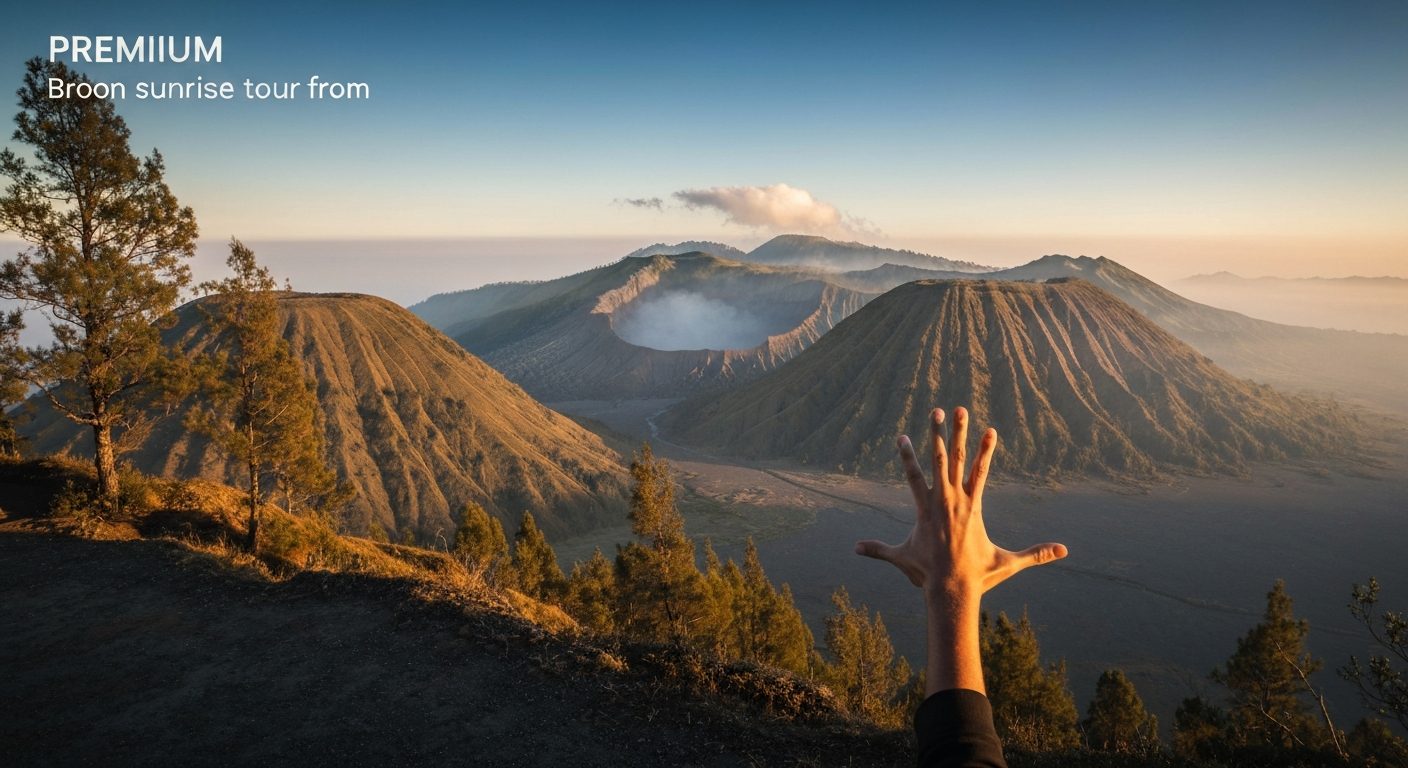
Planning a Mount Bromo sunrise hike requires precise logistics and an understanding of local conditions to ensure both enjoyment and safety. This guide provides practical bromo sunrise hike tips safety, detailing every step of the journey from pre-dawn pickup to the final crater climb, grounded in real-world experience.
Mount Bromo, or Gunung Bromo, is an active volcano in East Java, Indonesia, renowned for its dramatic caldera and the spectacular sunrise views over its steaming crater. It’s a highlight for many travelers extending their Bali holiday into Java, offering a raw, powerful encounter with nature. The trek is not overly strenuous but involves an early start, cold temperatures, and some walking on varied terrain.
Understanding Your Bromo Sunrise Options
Your Bromo experience can vary depending on your starting point, budget, and preference for privacy. Most travelers choose between a group tour or a private arrangement, often combining Bromo with the Ijen blue fire trek.
Starting Points:
- From Bali: This is a popular multi-day overland circuit. You’ll typically travel by car and ferry to East Java, staying overnight before the Bromo sunrise.
- From Surabaya or Malang: These East Java cities serve as common entry points for shorter Bromo-only or Bromo+Ijen tours, often involving a late-night drive to the Bromo area.
- From Probolinggo or Cemoro Lawang: Probolinggo is a major transport hub, while Cemoro Lawang is the village directly bordering the Bromo Tengger Semeru National Park, offering the closest accommodation to the viewpoints.
Private vs. Group Tours:
- Private Tours: Offer flexibility in timing, choice of accommodation, and a personalized pace. You’ll have a dedicated driver and guide. This is generally the preferred option for those starting from Bali or wanting a comprehensive Java overland experience. Indicative pricing for a private 2-day/1-night Bromo + Ijen tour starting from Surabaya or Malang is around US$94-156 per person (last verified June 2026), excluding international flights but including transfers, basic accommodation, and park fees. A more extensive 3-day/2-night Bromo + Ijen + Borobudur tour starting from Bali and dropping off in Yogyakarta, including transfers, guides, and mid-range accommodation, typically costs around US$219-344 per person for a private tour (last verified June 2026).
- Group Tours: More budget-friendly, but less flexible. You’ll share transport and stick to a fixed schedule. Availability varies, and quality can be inconsistent. Be aware that the cost savings might come at the expense of comfort or personalized attention. Bali Java Overland operates private tours, ensuring a higher standard of service and safety for your adventure.
The Bromo Sunrise Experience: A Step-by-Step Guide
The Bromo sunrise hike is a sequence of events designed to get you to a viewpoint before dawn, then across the sand sea to the crater rim itself. It’s an early start, but the rewards are immense.
Pre-Dawn Pickup & Drive to the Viewpoint
Your adventure begins in the dead of night. If you’re staying in Cemoro Lawang, your pickup will be around 3:00 AM – 3:30 AM. From further afield, like Malang or Surabaya, the drive to the Bromo area will start even earlier, potentially around midnight. You’ll be picked up by a local 4×4 jeep, the only vehicle allowed to navigate the challenging terrain of the Bromo Tengger Semeru National Park.
The drive to the sunrise viewpoints is cold and dark. Jeeps often move in convoys, creating a line of headlights tracing the winding mountain roads. The air is crisp; temperatures can drop significantly, especially at higher altitudes. Be prepared for a bumpy ride.
Choosing Your Bromo Sunrise Viewpoint: Penanjakan vs. King Kong Hill
The Bromo region offers several viewpoints, each providing a unique perspective of the caldera. The goal is to reach one of these spots well before sunrise to secure a good position.
- Penanjakan 1 (Mount Penanjakan)
- This is the most famous and highest viewpoint, sitting at approximately 2,770 meters (9,088 feet) above sea level. It offers a panoramic vista of the Bromo caldera, Mount Batok, and the majestic Mount Semeru (Indonesia’s highest volcano) smoking in the distance. Its popularity means it gets very crowded, especially during peak season and weekends. Expect to jostle for space, and arrive early to find a good spot. There are small stalls selling hot drinks and snacks here, which are a welcome comfort in the cold.
- King Kong Hill
- Located slightly lower than Penanjakan 1 but offering a remarkably similar view, King Kong Hill (or Penanjakan 2) is a good alternative for those who prefer fewer crowds. The views are equally impressive, capturing the same iconic landscape without the intense competition for a vantage point. It’s a favorite among photographers seeking a less obstructed shot. Access is still via jeep, and the walk from the jeep drop-off to the viewing area is relatively short.
- Seruni Point
- A relatively new viewpoint, Seruni Point requires climbing a long set of concrete stairs (the Seruni Point Stairs) to reach the viewing platform. While it offers a good view, it’s generally considered a secondary option compared to Penanjakan 1 or King Kong Hill. It can be a good choice if you’re looking for a quieter spot and don’t mind the extra physical effort.
Regardless of your chosen viewpoint, the waiting game in the dark and cold is part of the experience. Layer up, bring a hot drink, and be patient. As the first rays of light paint the sky, the landscape transforms from a black silhouette to a vibrant canvas of colors, revealing the vast Sea of Sand and the volcanic peaks.
The Sea of Sand 4×4 Jeep Crossing
After sunrise, your jeep will descend from the viewpoint, traversing the vast, otherworldly landscape known as the “Sea of Sand” (Lautan Pasir). This approximately 3-kilometer journey across the volcanic ash desert is an experience in itself. The jeeps kick up dust, creating a dramatic, almost lunar atmosphere.
The drive ends at a designated parking area near the base of Mount Bromo. From here, you’ll continue on foot. Depending on how far your jeep can go and the specific parking arrangements on the day, the walk across the remainder of the sand sea to the base of Bromo’s crater stairs can be anywhere from 1.5 to 3 kilometers (about 20-40 minutes). If you prefer, local horse owners offer rides for a fee, which can shorten the walk, though you’ll still need to climb the stairs yourself.
Trekking to the Bromo Crater Rim
The final leg of the journey involves ascending to the crater rim. This is where you get up close and personal with the active volcano.
The Bromo Crater Stairs Climb
At the base of Mount Bromo, you’ll find a Hindu temple (Pura Luhur Poten) and then the iconic concrete stairs leading up to the crater rim. There are approximately 250 steps to climb. The ascent is steady, and while not overly steep, the thin air at altitude can make it feel more challenging for some. Take your time, pause if needed, and enjoy the views as you climb.
Once at the rim, you’ll be greeted by the strong smell of sulfur and the constant rumble of the active volcano. The crater emits thick white smoke, a powerful reminder of Bromo’s raw energy.
Safety at the Crater Rim
Safety at the Bromo crater rim is paramount.
- Stay within designated areas: There are often ropes or barriers indicating safe zones. Do not cross them.
- Maintain distance: Keep a safe distance from the edge of the crater. The ground can be loose and unstable in places.
- Mind the fumes: The sulfur fumes can be strong, especially if the wind shifts. If you are sensitive to sulfur or have respiratory issues, consider bringing a mask or scarf to cover your nose and mouth.
- Volcanic activity: Mount Bromo is an active volcano. Conditions can change rapidly. Always follow the instructions of your guide and any park rangers. Access to the crater rim can be closed without notice if volcanic activity increases.
Mount Bromo Caldera Entrance Fee & Park Logistics
Access to the Bromo Tengger Semeru National Park requires an entrance fee, which helps with park maintenance and conservation. This fee is typically paid at the park entrance gate or arranged by your tour operator.
Indicative Entrance Fees (last verified June 2026):
- Foreign Visitors:
- Weekday: IDR 220,000 (approximately US$13.75) per person
- Weekend/Public Holiday: IDR 320,000 (approximately US$20) per person
- Domestic Visitors:
- Weekday: IDR 29,000 per person
- Weekend/Public Holiday: IDR 34,000 per person
These fees are per person and subject to change. Your private tour package with Bali Java Overland usually includes these fees, ensuring a smooth entry. The 4×4 jeep rental is a separate cost, generally around IDR 600,000-800,000 per jeep (seating 4-6 people), also often included in a private tour package.
Best Accommodation Near Mount Bromo
For the Bromo sunrise, staying as close to the park entrance as possible is crucial to minimize pre-dawn travel. The village of Cemoro Lawang is the most popular and convenient choice.
- Cemoro Lawang: This village is perched right on the rim of the caldera, offering basic but functional accommodation. Options range from simple guesthouses to a few slightly more comfortable hotels. Expect cold temperatures, as heating is not always standard, and hot water can be intermittent. The main advantage is its proximity to the jeep pick-up points and the quick access to the national park. Given the early start, a short drive to the viewpoint is highly valued.
- Ngadisari: Another nearby village, Ngadisari offers similar accommodation options to Cemoro Lawang. It’s a bit further from the viewpoints, adding a few minutes to your jeep ride, but still a viable option.
When booking with Bali Java Overland, we arrange vetted accommodation that prioritizes convenience and comfort, understanding the need for rest before an early start.
Bromo Sunrise Photography Tips
Capturing the beauty of Bromo requires some preparation, especially given the low light and dynamic conditions.
- Arrive Early: Secure a prime spot at the viewpoint before the crowds swell. This gives you time to set up your gear.
- Tripod is Essential: For sunrise shots, a tripod is non-negotiable. It allows for longer exposures in low light, capturing the dramatic colors of the sky and the details of the landscape without blur.
- Wide-Angle Lens: A wide-angle lens (16-35mm equivalent) is ideal for capturing the vastness of the caldera, the surrounding mountains, and the expansive sky.
- Telephoto Lens: Bring a telephoto lens (e.g., 70-200mm) for close-ups of Mount Bromo’s smoking crater or distant Mount Semeru.
- Manual Settings: Learn to shoot in manual mode. Adjust ISO (start low, increase as needed), aperture (f/8 or f/11 for sharp landscapes), and shutter speed (experiment with longer exposures for smooth skies).
- RAW Format: Shoot in RAW for maximum flexibility in post-processing, especially for adjusting exposure and white balance.
- Protection from Dust: The Sea of Sand can be very dusty. Protect your camera gear with dust covers or plastic bags, and avoid changing lenses in windy conditions.
- Battery Life: Cold temperatures drain batteries faster. Bring spare batteries and keep them warm (e.g., in an inside pocket).
- Headlamp/Torch: Useful for navigating in the dark before sunrise and setting up your camera.
Preparing for Your Bromo Sunrise Hike
Being adequately prepared will significantly enhance your Bromo experience.
Altitude & Cold-Weather Prep
Mount Bromo’s peak is at 2,329 meters (7,641 feet), and the main viewpoints are even higher, like Penanjakan 1 at approximately 2,770 meters (9,088 feet). This altitude, combined with the pre-dawn timing, means it gets very cold.
- Layer Up: Wear multiple layers that you can add or remove. Think thermal base layers, a fleece or wool mid-layer, and a windproof/waterproof outer jacket.
- Warm Accessories: A warm hat, gloves, and a scarf are crucial. These make a significant difference in comfort during the long wait for sunrise.
- Sturdy Shoes: Wear comfortable, closed-toe walking shoes or light hiking boots with good grip. The terrain at the viewpoints and across the sand sea can be uneven and dusty.
- Hydration: Drink plenty of water to help with altitude acclimatization, even if you don’t feel thirsty in the cold.
- Pace Yourself: If you’re not used to altitude, take it easy on the stairs to the crater rim. Listen to your body.
What to Pack
- Warm Clothing: As detailed above – layers, hat, gloves, scarf.
- Headlamp or Small Torch: Essential for navigating in the dark.
- Small Backpack: To carry water, snacks, and extra layers.
- Water Bottle: Stay hydrated.
- Snacks: Energy bars, fruit, or other small bites.
- Camera Gear: With extra batteries and protection.
- Sunscreen & Sunglasses: Once the sun rises, it can be intense.
- Personal Medications: If you have any.
- Cash (IDR): For small purchases like hot drinks or horse rides.
- Mask: For sulfur fumes at the crater rim, if you’re sensitive.
Planning Your Bromo + Ijen Tour from Bali
Many travelers combine Mount Bromo with the mesmerizing Ijen blue fire trek, often as part of a multi-day overland journey starting from Bali. This circuit offers a comprehensive taste of East Java’s dramatic volcanic landscapes.
Bromo Crater Trekking Tour Bali Start: The Overland Journey
Beginning a Bromo crater trekking tour from Bali involves a structured overland journey. Bali Java Overland specializes in mapping these routes with precision.
- Bali to Ketapang Ferry Terminal: The journey starts with a private car transfer from your accommodation in Bali to the Gilimanuk ferry terminal on Bali’s western tip. This drive can take 3-5 hours depending on your starting point (e.g., Seminyak, Ubud, Canggu).
- Ketapang Ferry Crossing: From Gilimanuk, you’ll take a local car ferry to Ketapang, Banyuwangi, on the eastern tip of Java. Ferries operate 24/7, departing frequently (every 15-30 minutes), and the crossing itself takes approximately 1 hour. This is a local public ferry; expect basic facilities.
- East Java Drive & Overnight Stay: Upon arrival in Ketapang, a new driver will meet you for the drive inland towards the Bromo region. This typically involves several hours of driving to your accommodation in or near Cemoro Lawang. You’ll check in, have dinner, and get a few hours of sleep before the early Bromo sunrise pickup.
- Bromo Sunrise & Crater Trek: As detailed above, the pre-dawn jeep adventure to the viewpoint, followed by the sand sea crossing and crater rim climb.
- Journey to Ijen (if applicable): After Bromo, if you’re continuing to Ijen, you’ll return to your accommodation for breakfast, then drive towards the Ijen region (usually near Sempol or Paltuding). This is another several-hour drive.
- Ijen Blue Fire Trek: This involves another late-night/1am start from Paltuding to trek to the Ijen crater for the blue fire phenomenon and sunrise. The hike is approximately 2-3 hours one way and requires a gas mask due to the strong sulfur fumes.
- Continue to Central Java or Drop-off: From Ijen, you can continue your journey to Central Java for Borobudur and Prambanan, or be dropped off at a major transport hub like Surabaya, Malang, or Banyuwangi airport for onward travel.
This overland circuit requires careful planning to manage transfer windows, ferry timetables, and ensure you have comfortable, safe transport and accommodation. Bali Java Overland takes care of all these moving parts.
Book Your Bromo Sunrise Adventure
The Mount Bromo sunrise hike is a truly memorable experience, offering a blend of natural grandeur and cultural insight. From the cold, dark ascent to the dramatic reveal of the caldera at dawn, and the close encounter with an active volcano, it’s an adventure that stays with you.
We understand the intricacies of planning such a trip, especially when coordinating multiple destinations and early morning logistics. Bali Java Overland is operated by Bali Premium Trip, and we are dedicated to providing clear, comprehensive planning and booking services. We arrange all ground transportation, vetted accommodation, park fees, and licensed local guides who prioritize your safety and experience. You book directly with our Bali Premium Trip reservations team at transparent, published rates, with no hidden third-party markups. We arrange all third-party services such as park jeeps, guides, and permits via our trusted local partners, ensuring a seamless and reliable journey.
Ready to witness the iconic Bromo sunrise for yourself? We’re here to help you map out the perfect itinerary.
Plan your trip with us today, or send a WhatsApp message to our team for quick, personalized planning assistance.
Frequently Asked Questions
How difficult is the Bromo sunrise hike?
The hike is moderately easy. The main challenges are the early start (often 3 AM), cold temperatures at the viewpoint, and the approximately 250 steps to the crater rim. The walk across the Sea of Sand is flat but can be dusty. No technical climbing is involved.
What is the best time of year to visit Mount Bromo?
The dry season, from May to October, is generally considered the best time for clear skies and optimal sunrise views. The rainy season (November to April) can bring clouds, fog, and occasional trail closures due to heavy rain, though Bromo is accessible year-round.
Is it safe to go to the Bromo crater rim?
Yes, it is generally safe if you follow designated paths and guide instructions. Mount Bromo is an active volcano, so conditions can change. Always stay behind safety barriers, maintain a safe distance from the edge, and be aware of sulfur fumes. Park authorities or your guide will advise on current conditions and access rules.
Can I visit Mount Bromo without a tour?
Yes, it’s possible to visit independently, but it requires arranging your own transport (jeep rental, car to Cemoro Lawang), accommodation, and entrance fees. For convenience and safety, especially with the pre-dawn logistics and national park, most travelers opt for a guided tour.
What should I wear for the Bromo sunrise hike?
Dress in warm layers, including a thermal base layer, a fleece or sweater, and a windproof/waterproof jacket. Bring a warm hat, gloves, and a scarf. Wear comfortable, sturdy walking shoes or light hiking boots. Temperatures at the viewpoints before sunrise can drop to 5-10°C (41-50°F).