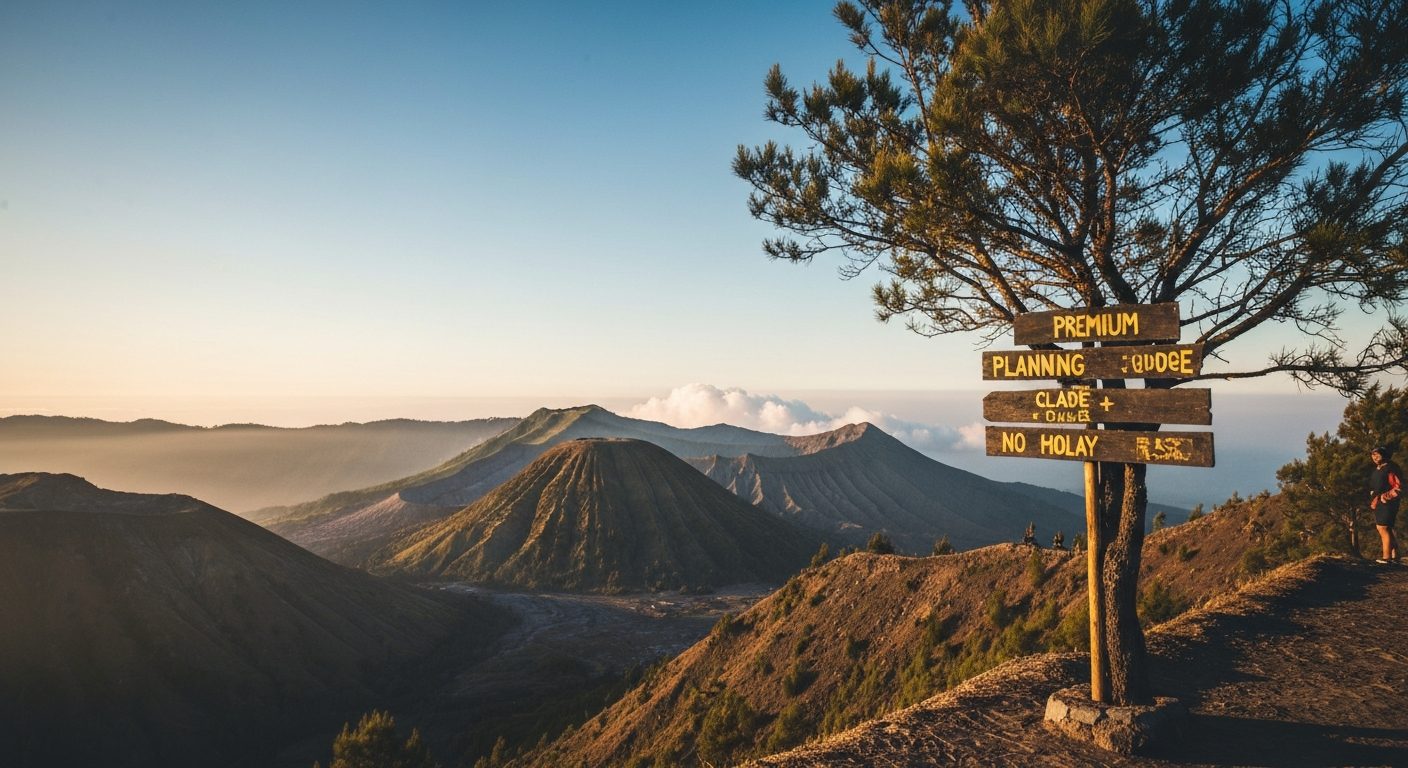
I’m Putri Anggraini, a Tour Cost & Booking Analyst at Bali Java Overland, and the most common question I hear is, “Exactly how many days for Bromo Ijen and the whole Bali + Java circuit?” Determining bromo ijen how many days you need is crucial for a well-paced trip, especially when extending to Central Java. The truth is, while you can technically rush the East Java volcanoes in a very tight 3 days from Bali, a truly rewarding Bali Java overland experience – including Bromo’s sunrise, Ijen’s blue fire, and Central Java’s ancient temples – typically requires 6 to 10 days.
Planning a multi-destination trip across Bali and Java involves more than just selecting destinations; it means understanding the actual travel time, the demanding schedules of volcano hikes, and the logistics of crossing islands. We’ve mapped countless routes, handled the Ketapang ferry crossing many times, and coordinated those 1 AM Ijen hikes for our travellers. This guide breaks down what’s genuinely achievable within different trip lengths, helping you match your available time to a realistic bali java tour duration how many days.
Understanding the Core Logistics: Why Days Matter More Than Miles
The Bali + Java circuit isn’t a point-to-point hop. It’s a journey across significant distances, often involving overnight transfers and very early starts. Your bali java tour duration how many days depends heavily on how many of Indonesia’s iconic sights you want to see without feeling constantly rushed.
The typical route flows like this:
- Bali Base: Most travellers start and end their journey in Bali (usually around Denpasar airport, DPS).
- East Java Leg: This is the heart of the volcano experience.
- Travel to Mount Bromo: From Bali, this involves a land transfer to Gilimanuk port, the Ketapang ferry crossing to Banyuwangi, and then onward travel to the Bromo region. This is a full day of travel.
- Mount Bromo Sunrise: Requires a very early pre-dawn start (around 3 AM) for the jeep tour to a viewpoint, then a hike to the crater rim.
- Mount Ijen Blue Fire/Crater Lake: Another pre-dawn start, often leaving your accommodation around 1 AM, followed by a 1.5-hour hike up, descent into the crater (for blue fire), and then the trek back down.
- Travel from Ijen: From Ijen, you either return to Bali via the Ketapang ferry or continue your journey deeper into Java.
- Central Java Extension (Yogyakarta): If you’re not heading back to Bali immediately, the next logical step is Central Java.
- Travel to Yogyakarta: From East Java (e.g., Banyuwangi or Surabaya), this typically means a train ride to Yogyakarta, which can take 6-8 hours.
- Yogyakarta Exploration: This includes Borobudur Temple (another early morning, often for sunrise), Prambanan Temple, and exploring the city itself.
- Departure: From Yogyakarta, you can fly internationally or domestically back to Bali.
Each of these major transitions or experiences consumes significant time – sometimes a full day just for travel, or a full night for a volcano hike. This is why cramming too much into too few days leads to exhaustion, not enjoyment.
Is 3 Days Enough for Bromo Ijen from Bali? The Fast Track Option
Many travellers, particularly those with limited time, ask is 3 days enough for bromo ijen from bali? The short answer is yes, if you are prepared for a very intense, fast-paced trip focused solely on the volcanoes. This option generally looks like this:
- Day 1 (Afternoon/Evening): Pick up from your Bali accommodation (e.g., Canggu, Seminyak, Ubud), transfer to Gilimanuk port, take the Ketapang ferry to Banyuwangi, then continue by private car to your accommodation near Mount Bromo. This is essentially an overnight transfer.
- Day 2 (Early Morning to Afternoon): Mount Bromo sunrise tour (3 AM start), explore the crater, then drive towards the Ijen region. You’ll arrive at your Ijen accommodation in the late afternoon/evening, having had little rest.
- Day 3 (Very Early Morning to Evening): Mount Ijen blue fire/crater lake hike (1 AM start). After descending, you’ll have breakfast and immediately begin the long journey back to Bali via the Ketapang ferry, arriving late evening.
This 3-day itinerary is doable but very demanding. You’ll spend a lot of time in a vehicle, have minimal sleep, and experience the volcanoes in quick succession. It’s a “see it and move on” pace, suitable for those whose priority is ticking off Bromo and Ijen and who are physically fit and resilient. It offers no time for relaxation or deeper cultural immersion. We generally recommend at least 4-5 days if you want to avoid feeling utterly exhausted.
Bali Java Overland: 6 Days – East Java’s Volcanic Wonders
A 6-day bali java overland 6 days tour focuses on the volcanic highlights of East Java, starting and ending in Bali. This duration allows for a more comfortable pace than the 3-day sprint, with proper rest days built in. It’s ideal if your primary interest is Bromo and Ijen, and you prefer to spend the bulk of your holiday in Bali.
A typical 6-day itinerary might look like this:
- Day 1: Bali to Bromo Region (Travel Day)
- Morning pick-up from your Bali accommodation.
- Scenic drive to Gilimanuk port, ferry crossing to Ketapang (Banyuwangi).
- Continue by private car to your accommodation in the Bromo region (e.g., Cemoro Lawang or nearby towns).
- Arrival in the late afternoon/evening, check-in, and relax before an early start.
- Day 2: Mount Bromo Sunrise & Drive to Ijen Region
- Pre-dawn wake-up (around 3 AM) for the jeep tour to a sunrise viewpoint (e.g., Penanjakan or King Kong Hill).
- Descend into the Sand Sea, hike to Bromo’s crater rim, and experience the active volcano up close.
- Return to your hotel for breakfast and check-out.
- Longer drive to the Ijen region (e.g., Banyuwangi or Licin), arriving in the late afternoon.
- Check-in and rest.
- Day 3: Mount Ijen Blue Fire & Return to Bali (Overnight)
- Very early wake-up (around 1 AM) for the drive to Paltuding (Ijen’s starting point).
- Hike up to the crater rim, descend into the crater (conditions permitting) to witness the blue fire phenomenon and watch the sulphur miners at work.
- Ascend back to the rim for sunrise over the turquoise lake, then descend to Paltuding.
- Return to your hotel for breakfast and check-out.
- Transfer to Ketapang port, ferry crossing back to Gilimanuk, and drive back to your Bali accommodation.
- Arrival in Bali late evening.
- Day 4: Rest Day in Bali
- A much-needed day to relax, recover from the early starts and travel, and enjoy Bali’s beaches or culture.
- Day 5: Bali Exploration
- Explore more of Bali at your leisure – perhaps Ubud’s rice paddies, Seminyak’s cafes, or a cultural experience.
- Day 6: Departure from Bali
- Enjoy a final Bali breakfast before transferring to the airport for your onward flight.
Key Trade-offs for 6 Days:
- Pros: Covers Bromo and Ijen at a reasonable pace, includes recovery time in Bali.
- Cons: Does not include Central Java (Borobudur, Prambanan, Yogyakarta). You’ll spend two full days just on travel to and from Java.
Bali Java Overland: 8 Days – The Classic Volcanoes & Temples Circuit
For many, an 8-day bali java overland tour 8 days strikes the perfect balance, combining the dramatic East Java volcanoes with the cultural wonders of Central Java’s Yogyakarta. This is a very popular how many days bali java overland option as it offers a comprehensive experience without feeling overly rushed.
An 8-day itinerary (starting and ending in Bali) typically looks like this:
- Day 1: Bali to Bromo Region (Travel Day)
- Morning pick-up from Bali, travel to Gilimanuk, Ketapang ferry crossing.
- Continue by private car to your Bromo region accommodation.
- Arrival late afternoon/evening.
- Day 2: Mount Bromo Sunrise & Drive to Ijen Region
- Pre-dawn Bromo sunrise tour, explore the crater.
- Return to hotel for breakfast, check-out.
- Drive to the Ijen region (Banyuwangi/Licin).
- Check-in and rest.
- Day 3: Mount Ijen Blue Fire & Travel to Surabaya/Probolinggo
- Very early Ijen blue fire/crater lake hike.
- Return to hotel for breakfast, check-out.
- Transfer to a major train station (e.g., Karangasem, Probolinggo, or Surabaya Gubeng) for your train to Yogyakarta.
- This day involves significant travel, arriving in Yogyakarta in the late evening.
- Transfer to your Yogyakarta hotel.
- Day 4: Borobudur Sunrise & Prambanan Temples
- Early morning visit to Borobudur Temple for sunrise (or shortly after opening), explore the magnificent stupas.
- Return to Yogyakarta.
- Afternoon visit to Prambanan Temple complex.
- Evening free to explore Yogyakarta city or enjoy a local dinner.
- Day 5: Yogyakarta City & Cultural Exploration
- Explore Yogyakarta city: Sultan’s Palace (Keraton), Water Castle (Taman Sari), Malioboro Street for shopping.
- Perhaps a batik workshop or traditional puppet show.
- Enjoy the vibrant local culture.
- Day 6: Free Day in Yogyakarta or Optional Excursion
- A buffer day for relaxation, deeper exploration, or an optional excursion (e.g., Merapi jeep tour, Jomblang Cave).
- Day 7: Yogyakarta to Bali (Flight)
- Morning free for last-minute souvenir shopping or relaxation.
- Transfer to Yogyakarta Adisutjipto Airport (JOG) for a domestic flight back to Bali (Denpasar, DPS).
- Arrival in Bali, transfer to your accommodation.
- Day 8: Departure from Bali
- Enjoy your last Bali breakfast before transfer to DPS for your international flight.
Key Trade-offs for 8 Days:
- Pros: Comprehensive coverage of East and Central Java’s major icons, includes volcanic adventure and cultural immersion. Uses a domestic flight for the return to Bali, saving significant travel time.
- Cons: Still involves several early starts and long travel days, especially on Day 3. You’ll be constantly moving.
Bali Java Overland: 10 Days – A Deeper, More Relaxed Exploration
When planning a bali java 10 day tour or java bali overland 10 days itinerary, you unlock the luxury of a more relaxed pace and deeper immersion. This duration is perfect for travellers who want to truly savour each destination, allowing for more spontaneous exploration, additional activities, and recovery time. It’s the ideal bali java overland how many days if you have the time and want to avoid feeling rushed.
A 10-day itinerary (starting and ending in Bali) could look like this:
- Day 1: Bali to Bromo Region (Travel Day)
- Morning pick-up from Bali, ferry to Ketapang, drive to Bromo region.
- Arrival late afternoon/evening, check-in, relax.
- Day 2: Mount Bromo Sunrise & Exploration
- Pre-dawn Bromo sunrise tour, explore the crater.
- Return to hotel for breakfast.
- Enjoy a more relaxed afternoon, perhaps exploring the local village or simply resting.
- Day 3: Bromo Region to Ijen Region (Leisurely Travel)
- Morning check-out.
- Leisurely drive from Bromo to the Ijen region.
- Opportunity for stops along the way (e.g., local markets, waterfalls).
- Check-in at your Ijen accommodation in the afternoon.
- Day 4: Mount Ijen Blue Fire & Travel to Surabaya (for train)
- Very early Ijen blue fire/crater lake hike.
- Return to hotel for breakfast, check-out.
- Transfer to Surabaya Gubeng train station (a longer but more comfortable train hub than closer stations).
- Overnight stay in Surabaya to break up the journey and experience a different city.
- Day 5: Surabaya to Yogyakarta (Train) & Free Afternoon
- Morning train from Surabaya to Yogyakarta (around 4-5 hours).
- Check into your Yogyakarta hotel in the early afternoon.
- Free afternoon to relax, settle in, or take a gentle stroll around your hotel area.
- Day 6: Borobudur Sunrise & Prambanan Temples
- Early morning Borobudur sunrise (or opening time) visit.
- Afternoon visit to Prambanan Temple.
- Enjoy a traditional Javanese dinner.
- Day 7: Yogyakarta City & Cultural Deep Dive
- Full day exploring Yogyakarta: Sultan’s Palace, Water Castle, Malioboro Street.
- Consider a cooking class, a silver-making workshop, or a longer batik experience.
- Day 8: Optional Yogyakarta Excursion or Relaxation
- Choose from options like a Merapi volcano jeep tour, Jomblang Cave adventure, or a visit to a coffee plantation.
- Alternatively, enjoy a completely free day for relaxation, shopping, or revisiting favourite spots.
- Day 9: Yogyakarta to Bali (Flight) & Leisure
- Morning free.
- Transfer to Yogyakarta Adisutjipto Airport (JOG) for your domestic flight back to Bali (DPS).
- Arrive in Bali, transfer to your chosen accommodation.
- Enjoy a relaxed evening in Bali.
- Day 10: Departure from Bali
- Final breakfast in Bali before your transfer to DPS for your international flight.
Key Trade-offs for 10 Days:
- Pros: Allows for a relaxed pace, more in-depth exploration of Yogyakarta, buffer days for unforeseen delays or spontaneous activities. Less exhaustion overall.
- Cons: Requires more holiday time and a larger budget.
Comparison: 6-Day vs. 8-Day vs. 10-Day Bali Java Overland Tours
To help you decide on the bali java overland how many days that suits you best, here’s a quick comparison of the core elements:
| Feature | 6-Day Tour (East Java Focus) | 8-Day Tour (Classic Volcanoes & Temples) | 10-Day Tour (Deeper Exploration) |
|---|---|---|---|
| Primary Focus | Bromo & Ijen volcanoes, quick return to Bali. | Bromo, Ijen, Borobudur, Prambanan, Yogyakarta city. | Bromo, Ijen, Borobudur, Prambanan, extended Yogyakarta, buffer days. |
| Pace | Fast-paced, minimal buffer days. | Moderate to fast, efficient coverage. | Relaxed, ample leisure and optional activities. |
| Key Destinations | Bali, Mount Bromo, Mount Ijen. | Bali, Mount Bromo, Mount Ijen, Borobudur, Prambanan, Yogyakarta. | Bali, Mount Bromo, Mount Ijen, Borobudur, Prambanan, extended Yogyakarta. |
| Travel Efficiency | Two-way land/ferry transfer to East Java. | Land/ferry to East Java, train to Central Java, flight back to Bali. | Land/ferry to East Java, train to Central Java, flight back to Bali. More relaxed travel days. |
| Physical Demands | High (multiple early starts, long transfers). | Moderate to high (early starts, less intense travel overall). | Moderate (early starts, more recovery time). |
| Indicative Price Range (Private Tour, per person) | US$650 – US$1,200 (last verified June 2026) | US$900 – US$1,800 (last verified June 2026) | US$1,200 – US$2,500 (last verified June 2026) |
*Note: Indicative prices are for private tours, per person, based on 2 travellers, and include private car/driver, guides, accommodation, park fees, and domestic flight if applicable. They vary significantly with group size, accommodation choice (budget to luxury), and exact itinerary customization.*
What ‘All-Inclusive’ Covers (and What It Doesn’t)
When we discuss bali java tour 2026 2027 planning, it’s important to be clear about costs. Our private tours are structured to be as comprehensive as possible, minimizing on-the-ground surprises.
What’s generally included:
- Private Air-Conditioned Transport: From pick-up in Bali, throughout Java, and transfer back to Bali airport. This includes all fuel, tolls, and driver fees.
- Ketapang Ferry Tickets: For the Bali-Java crossings.
- Accommodation: Hotels or guesthouses (standard, mid-range, or luxury, depending on your preference) with breakfast included.
- Experienced English-Speaking Guides: Licensed local guides for Bromo, Ijen, Borobudur, and Prambanan.
- Entrance Fees & Permits: All national park fees, Bromo jeep, Ijen gas mask, and temple entrance fees.
- Train Tickets: Executive or Business class tickets for inter-Java travel (e.g., East Java to Yogyakarta).
- Domestic Flight: For the return leg from Yogyakarta to Bali.
What’s typically not included:
- International Flights: To and from Indonesia.
- Meals: Lunch and dinner are generally not included, giving you the flexibility to choose where and what you eat. Your guide can provide recommendations.
- Personal Expenses: Souvenirs, laundry, snacks, drinks, tips for guides/drivers.
- Travel Insurance: Highly recommended for all travellers.
- Optional Activities: Any activities not explicitly listed in the itinerary (e.g., Merapi jeep tour or Jomblang Cave if not part of your agreed package).
We believe in transparent pricing. When you inquire, our Bali Premium Trip reservations team will provide a detailed quote based on your specific requirements and preferences. We arrange all these services directly with vetted, licensed local partners to ensure quality and safety.
Planning Your Bali Java Overland Tour: Considerations for 2026 & 2027
As you consider bali java tour 2026 2027 planning, a few other factors come into play:
- Best Time to Visit: The dry season (May to September) offers the most reliable weather for volcano hikes and temple visits. The rainy season (October to April) can bring challenges like slippery trails, reduced visibility, and potential tour adjustments due to heavy rain. However, the rainy season also means fewer crowds and lush green landscapes.
- Group Size: Our tours are private, meaning it’s just you (and your travel companions) with a dedicated driver and local guides. This offers maximum flexibility and comfort. Costs per person are generally lower for larger private groups.
- Accommodation Style: We can arrange budget-friendly guesthouses, comfortable mid-range hotels, or luxury resorts. Your choice significantly impacts the overall cost.
- Physical Fitness: The Bromo and Ijen hikes require a moderate level of fitness. Bromo involves some walking up stairs to the crater, while Ijen is a 1.5-hour uphill trek (one way) on a sometimes steep and uneven path. Good walking shoes are essential.
No matter your preferred pace or budget, we’re here to help you navigate the options and create a bali java overland how many days itinerary that perfectly fits your travel style.
Ready to map out your adventure? We can help you plan your trip with a custom itinerary and transparent costing. Our Bali Premium Trip reservations team is available via WhatsApp for direct planning assistance.
Frequently Asked Questions
Is 3 days enough for Bromo Ijen from Bali?
Yes, it’s technically possible to do a 3-day Bromo Ijen tour from Bali, but it’s an extremely fast-paced and demanding trip. You’ll have very early starts (1-3 AM) and long travel days, with minimal sleep. It’s suitable for travellers who are physically fit and want to tick off the volcanoes quickly, but it offers no time for relaxation or deeper exploration. We typically recommend at least 4-5 days for a less rushed experience of just the East Java volcanoes.
What’s the best time of year for a Bali Java tour?
The dry season, from May to September, is generally considered the best time for a Bali Java tour. During these months, you can expect clear skies, lower humidity, and more reliable conditions for volcano hikes and temple visits. The rainy season (October to April) can lead to occasional disruptions or more challenging hiking conditions, but also fewer crowds and greener scenery.
Do I need to book flights myself for the Java leg?
For our comprehensive Bali Java Overland tours, we typically include the domestic flight from Yogyakarta (JOG) back to Bali (DPS) in your package. You only need to arrange your international flights to and from Denpasar (DPS), Bali. This ensures a seamless booking process and avoids any logistical headaches for you.
What about accommodation during the tour?
Accommodation is included in our private Bali Java Overland tours. We work with a range of vetted hotels and guesthouses, from comfortable standard options to more luxurious choices, depending on your preferences and budget. All included accommodations will feature private bathrooms and breakfast. We select properties known for their comfort and convenient location for the itinerary.
How physically demanding are the Bromo and Ijen hikes?
The Bromo and Ijen hikes require a moderate level of physical fitness. The Bromo ascent to the crater rim involves walking up a series of concrete steps, which can be tiring but manageable for most. The Ijen hike is more demanding, typically a 1.5-hour uphill trek on a path that can be steep and uneven, especially if descending into the crater for the blue fire. Good hiking shoes, warm layers, and a headlamp are essential. It’s not a technical climb, but stamina is key.